Hunkydory: A Sweet Handwritten Font
There I was, staring at a blank brand board, trying to find the right visual voice for a new boutique coffee shop. The client wanted something warm, approachable, and a little bit whimsical. After testing several options, Hunkydory stood out—not just for its personality, but for how effortlessly it adapted to different design needs.
What Makes Hunkydory Unique?
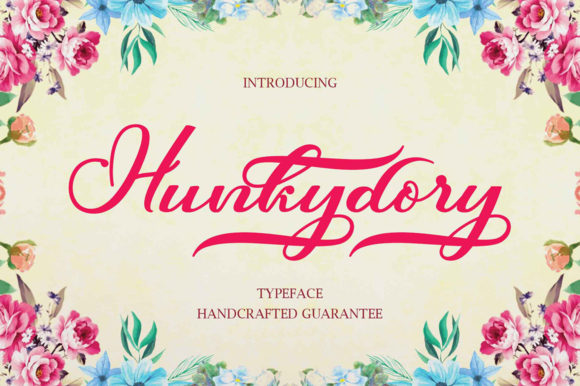
Hunkydory is a handwritten font with a natural, almost organic feel. Its strokes are soft and fluid, giving it a friendly and inviting vibe. It’s not overly ornate or complicated, which makes it accessible for a wide range of projects. The font has a distinct character that feels handcrafted, making it ideal for brands that want to convey authenticity and creativity.
Its PUA encoding means you can access all the glyphs without needing special software, which is a big plus for designers who work across different platforms. Whether you're designing a logo, a packaging label, or a social media graphic, Hunkydory offers flexibility and style in equal measure.
Testing Hunkydory in Real Projects
I first tried Hunkydory on a logo concept for the coffee shop. The font’s casual yet polished look worked well as a headline, adding a personal touch without being too informal. When paired with a simple sans serif for the tagline, it created a balanced contrast that felt both modern and warm.
On a packaging mockup, Hunkydory added a charming quality to the product labels. The font’s unique swashes and ligatures gave the designs a custom feel, perfect for a small business looking to stand out on the shelf. It also held up well in larger sizes, maintaining clarity and charm even when scaled up for signage or banners.
For a website header, Hunkydory brought a sense of playfulness that complemented the site’s overall aesthetic. It didn’t overpower the content, but it did catch the eye and set the tone for the brand’s personality. On social media, it worked equally well—whether as a post title, a caption, or a branded element in an Instagram story.
When Hunkydory Shines
Hunkydory excels as a display font, especially in short phrases or headlines. It’s best used where visual impact matters most, such as in logos, branding elements, or editorial layouts. Its handwritten nature makes it ideal for creative studios, handmade shops, and boutique brands that want to communicate a personal, artisanal touch.
The font also works well in combination with other typefaces. Pairing it with a clean serif or sans serif can create a harmonious balance, allowing Hunkydory to act as an accent or focal point. For example, using it alongside a modern sans serif in a business card design adds a human element that feels more engaging than a purely digital typeface.
Limitations and Considerations
While Hunkydory is versatile, it’s not a font for every situation. In long body text or small sizes, its legibility can suffer. It’s best avoided for formal corporate use, where a more structured typeface would be more appropriate. If you’re working on a project that requires high readability at a glance—like a menu, instruction manual, or technical document—Hunkydory may not be the best choice.
That said, when used intentionally, Hunkydory can add a unique flair to any design. It’s important to test it in different contexts before finalizing any project. Try it on a variety of surfaces, from print to digital, and see how it performs in real-world conditions.
Practical Tips for Using Hunkydory
If you’re considering Hunkydory for a branding project, start by experimenting with it in a few key areas. Test it on a logo draft, a packaging mockup, and a website header. Pay attention to how it interacts with other design elements and whether it aligns with the brand’s identity.
Also, make sure to check the font’s licensing terms before using it in client work. Commercial fonts often have specific restrictions, and understanding those upfront can save time and avoid legal issues later on.
Finally, don’t be afraid to mix and match. Hunkydory pairs well with other fonts, especially those that offer a contrasting style. Whether you’re going for a vintage look, a modern minimalism, or something in between, Hunkydory can be a valuable addition to your typographic toolkit.